Shopping Cart
Your cart is empty.


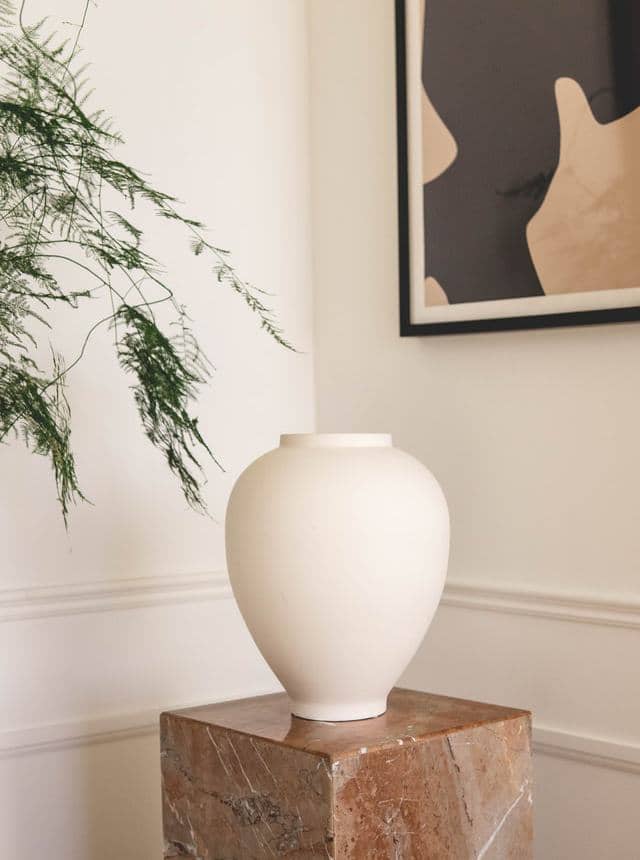
Glaze is a suspension, a chemistry and a weather report all at once. Small differences in any of them show up on the finished pot.
A glaze bucket is not a tin of paint. It is a suspension of minerals in water, and the minerals settle. Two jars dipped an hour apart carry different amounts of the heaviest ingredient, which is usually what gives the glaze its colour.
Thickness matters as much as chemistry. Where the wall turns, the glaze pools and fires deeper; where the wall is upright it runs thin and the clay beneath shows through. A potter who wants an even surface builds an even wall first.
Then there is the kiln. The same glaze fired near the burner and fired at the back of the chamber can differ by half a shade, which is why we mark every piece with its shelf position before it goes in.
None of this is a fault. It is the reason a handmade glaze reads as handmade, and it is the first thing we point out when someone asks why one jar costs more than another.